

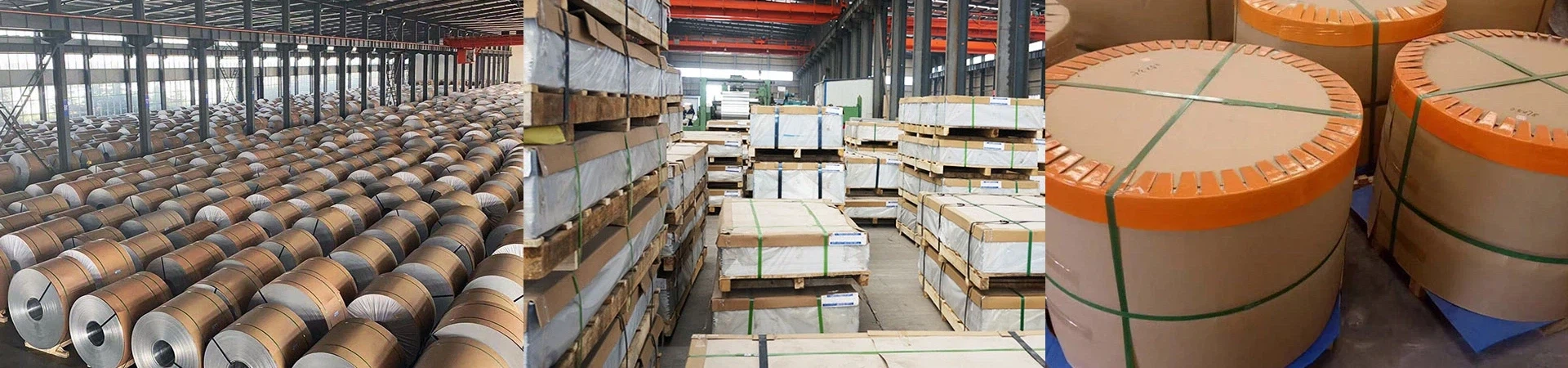
5052-H32 aluminum properties
5052-H32 aluminum is a non-heat-treatable alloy valued for its strong corrosion resistance, excellent formability, and good weldability. It provides a balanced combination of strength and workability, making it widely used in marine, automotive, and industrial applications. The H32 temper indicates that the alloy has been strain-hardened and partially annealed to achieve a moderate level of hardness and strength.
5052-H32
228 MPa (33,000 psi)
193 MPa (28,000 psi)
12% at 1/16" thickness; 18% at 1/2" thickness
60 Brinell
70.3 GPa (10,200 ksi)
117 MPa (17,000 psi)
5052-H32
5052-H32 aluminum is composed mainly of aluminum (95.7–97.7%), with magnesium (2.2–2.8%) and chromium (0.15–0.35%) as its main alloying elements.
Excellent, particularly in marine and seawater environments.
Very good, compatible with common welding processes.
Excellent ductility; can be bent and shaped without cracking.
Among the strongest non-heat-treatable aluminum alloys.
607–649 ℃ (1125–1200 ℃F)
138 W/m·K
GNEE, a Chinese supplier, offers high-quality 5052-H32 aluminum products for a wide range of industrial and marine applications.
5052 H32 density
The density of 5052-H32 aluminum is around 2.68 g/cm³ (equal to 2680 kg/m³ or 0.097 lb/in³). This figure is valid for all 5052 aluminum tempers, including H32, because density is governed by chemical composition rather than temper.
5052-H32 Yield strength
The 5052-H32 yield strength is 193 MPa (28,000 psi). This value shows the stress at which the material starts to distort irreversibly. It's also worth noting that this alloy's ultimate tensile strength is 228 MPa (33,000 psi), which is the highest stress it can bear before breaking.
Yield Strength: 193 MPa (28,000 PSI)
Ultimate Tensile Strength: 228 MPa (33,000 PSI)
5052 H32 vs. H34
GNEE 5052 H32 and H34 are both work-hardened aluminum alloys, with the primary difference being their℃of strain hardening. H34 is stronger and harder, while H32 is more formable and easier to bend or shape. The increased work hardening of H34 gives it higher strength, making it suitable for high-stress applications, whereas H32 is a versatile choice when formability is a priority.
| 5052-H32 | 5052-H34 | |
|---|---|---|
| High-pressure vessels, aerospace components, high-stress machine parts |

Both H32 and H34 are strengthened by cold working (strain hardening), but H34 undergoes more extensive hardening, resulting in higher strength and hardness.
H32 has a higher elongation rate, allowing it to deform more before breaking. This makes it ideal for applications requiring extensive shaping or bending.
H34 offers higher tensile and yield strength, making it more resistant to deformation under load. It is therefore preferred for components subjected to high stress.
GNEE provides both 5052 H32 and H34 aluminum sheets, ensuring reliable performance for a wide range of industrial, architectural, and high-stress applications.
Reasons to Choose 5052 H114 Aluminum Plate
Thanks to its outstanding corrosion resistance, 5052 aluminum plate maintains long-term performance even in harsh environments.
Cost-effectiveness:
Compared to other high-strength alloys, 5052 H114 aluminum plate offers a more competitive price while still delivering reliable performance.
This material is easy to fabricate and can be customized to meet a variety of requirements, making it suitable for diverse market applications.
As a fully recyclable material, 5052 aluminum alloy aligns with modern environmental standards and is an excellent choice for sustainable development.
GNEE, a Chinese supplier, offers high-quality 5052 H114 aluminum plates tailored for global industrial needs.


